
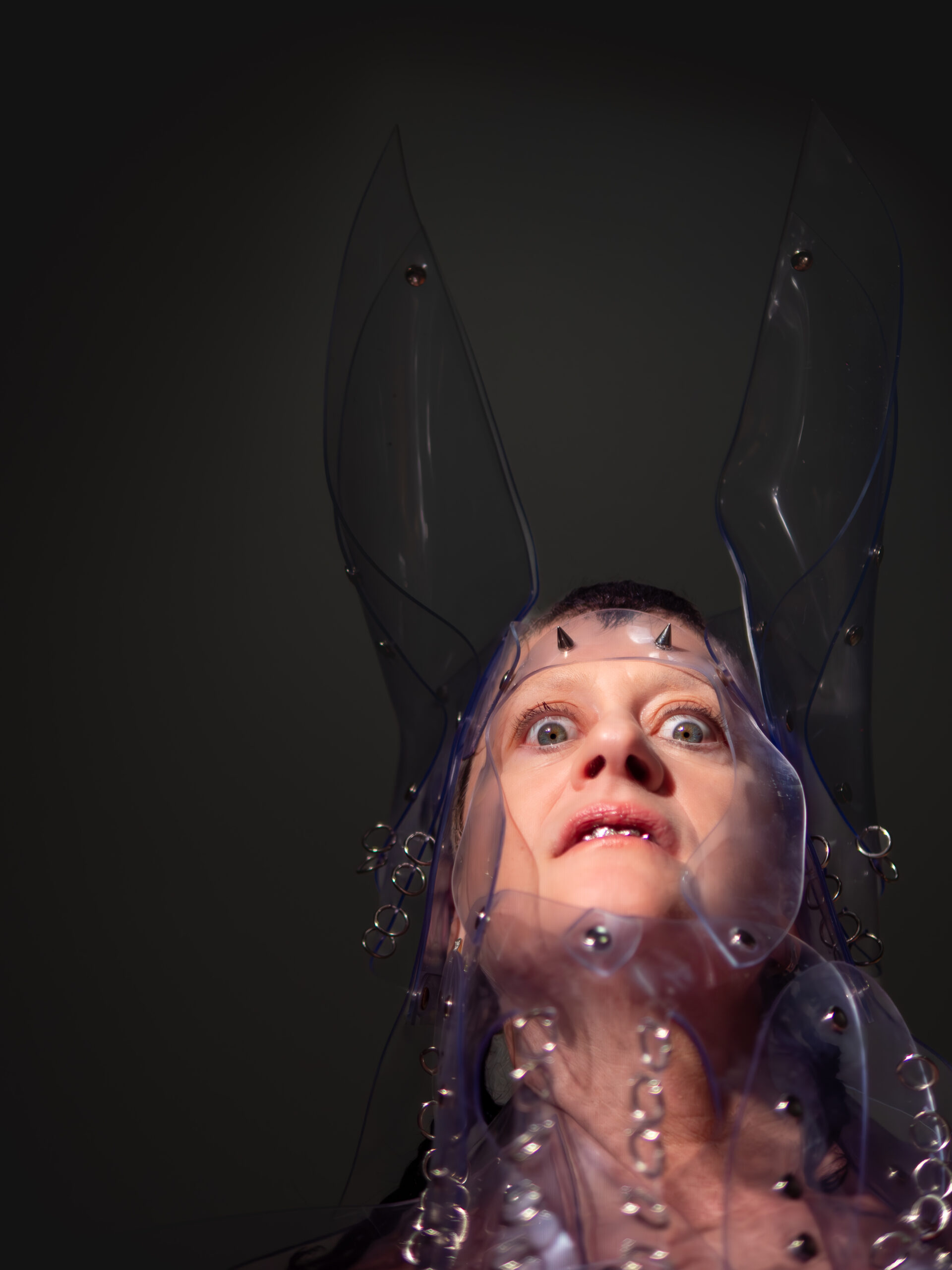
Photo by The Squirt Deluxe
In 2015, Peaches did something unexpected. On her album Rub, she peeled back the latex and weaponized wit, revealing something rawer.
Songs like “Free Drink Ticket” cracked open the armour of the Peaches persona and let vulnerability bleed through—confronting grief, rage, betrayal, and survival with a clarity that was disarming. For an artist known for confrontation, it was a different kind of provocation: radical vulnerability.
Her new album, No Lube So Rude, arrives as an inter-generational rallying call. The vulnerability remains, but here it is shrouded in armor, lubed up and ready to fuck shit up.
With its lean, searingly sloganeering lead single, “Not In Your Mouth None of Your Business,” Peaches lays bare what we, her community, should be feeling right now: that enough is e-fucking-nough. She re-purposes protest as an act that takes form not only in the streets or on the dance floor, but in the simple act of existence—in an era when, for many, physical safety and bodily autonomy have become luxuries.
Peaches wants us to get our shit together—and she’s here to lead the charge. Adeptly balancing the “poetic and the profane”, the album also confronts the creeping self-doubt and futility of waking each day into an increasingly unhinged world, marked by the very real rise of fascistic forces on a global scale. Veering between themes of rage, and lust for revolution, the album is front loaded with defiant, and yes, horny anthems for a world in ruins, but finds itself in a much more tender place as the album comes to a close.
Songs like the spiky, unsettling “Grip,” which careens between her trademark electronics, heavy metal riffs, and industrial flourishes, embody that mass confusion and destabilizing feelings that come with living in a constant state of anxiety. It’s followed by the track “You’re Alright,” an offering of care amidst the emotional and psychic unrest, and a reminder of the magnitude of community in times that can ultimately be so isolating.
Peaches doesn’t stop. She mutates. With her work, Peaches has consistently predated and forecasted trends in contemporary social dialogue and popular music, using it to flip our social perceptions on their… backs. This album weaponizes vulnerability into protest. It’s menopause as flex, and newness, rather than loss. Aging as revolt. Joy as revolution. It asks what happens when Women refuse expiration. When elders are punk. When the dance floor becomes both a mourning space and a battleground for love.
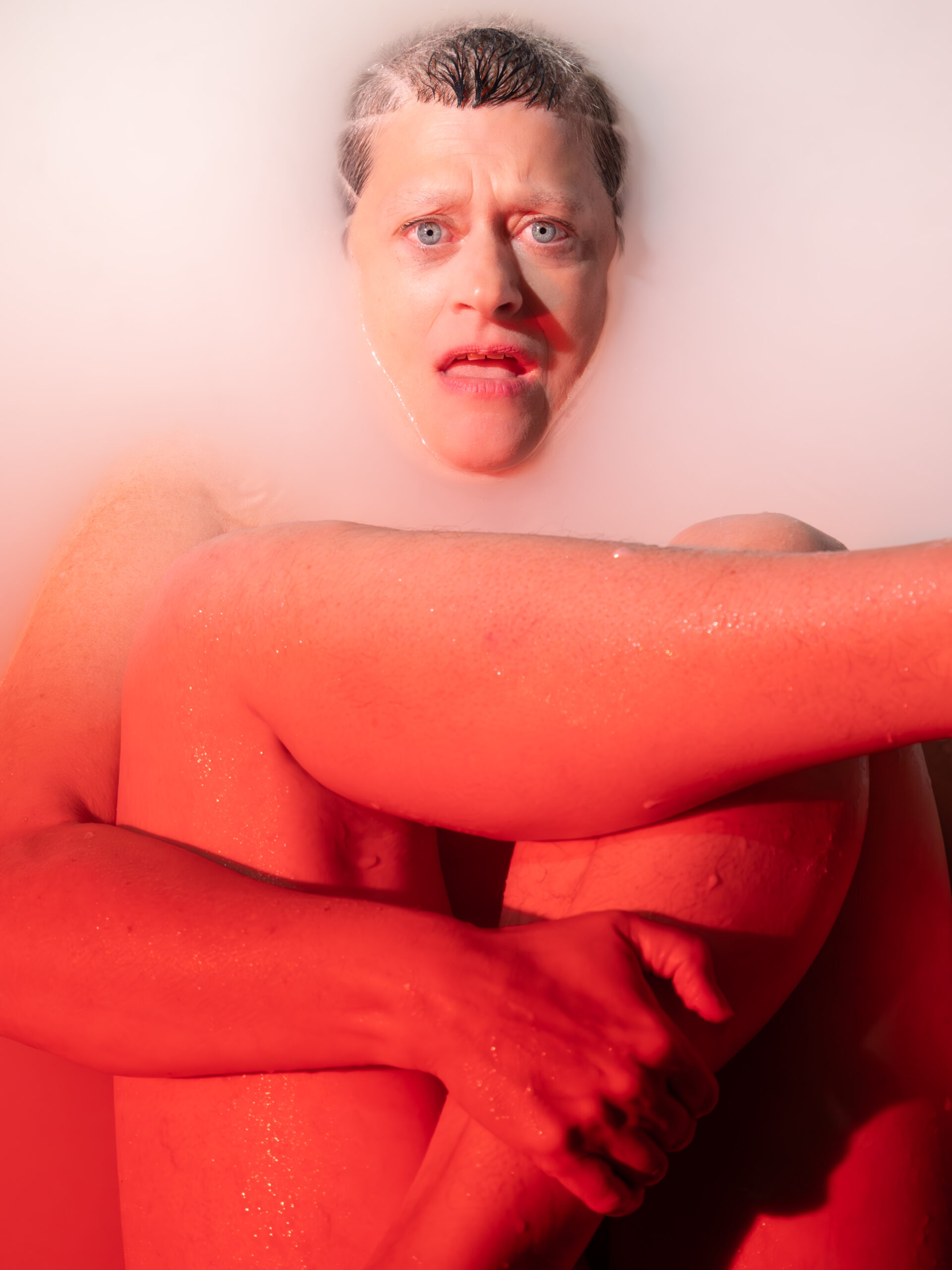 Between 2015 and now, Peaches has been anything but dormant. She’s been as restless and creatively expansive as ever. Swapping roles as rock star, performance and visual artist, and activist advocate for human rights.
In 2019, she debuted Whose Jizz Is This? in Hamburg—a solo exhibition of sculpture, film, and photography that re-imagined silicone sex aids as an autonomous society. That same year, she took the lead role in Die sieben Todsünden in Stuttgart, fusing opera with modern electronics. She mounted the sprawling, nearly 40-performer live spectacular There’s Only One Peach with the Hole in the Middle at Kampnagel and continued touring her re-imagined rock opera Peaches Christ Superstar.
It’s clear making records is just one of many mediums Peaches uses to her good, gooey word.
In May 2025, Peaches performed Cut Piece in Berlin—the 1964 performance by Yoko Ono in which audience members cut away the artist’s clothing. She first performed it at the Meltdown Festival in London, 2013; Cut Piece is regarded as a monumentally influential work of vulnerability as confrontation—a masterclass in projection, power, and restraint. The piece acts as a mirror to the viewer’s hidden intentions and personal or cultural biases. In this way, it is entirely aligned with Peaches’ approach to performance and her career trajectory dating back to her debut in the suitably futuristic-sounding year 2000.
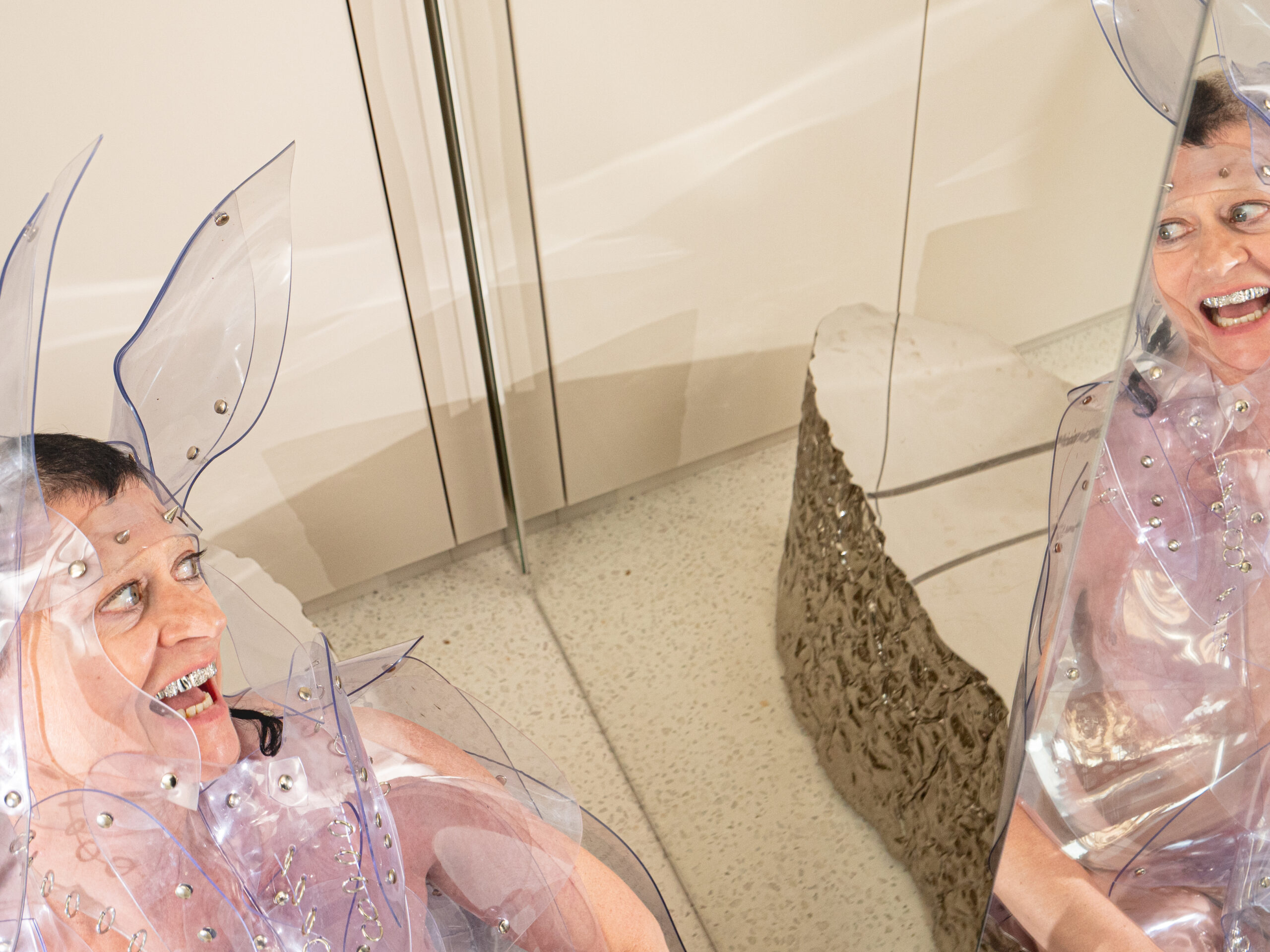
Photo by The Squirt Deluxe
These acts of letting pain and power coalesce feels like an era of renewed intention from the artist. Allowing seventeen years of her life—including family illness and very private grief—to unfold onscreen in Marie Losier’s portrait, Peaches Goes Bananas, navigating her mother’s stroke while watching the world fracture, feeling the friction and turning it into fuel.
All this considered, No Lube So Rude is still a sticky, pervy, Peaches Party, with extra added stomping on the dancefloor. In her world, we’re one gooey unit trying to slip towards a future full of fucking, not fascism.
As she embarks on a world tour in support of the new album, we talk to Peaches about the new album; how she balances reinvention while remaining true to her profoundly one-of-a-kind Peachiness; how even a cultural icon such as herself finds artistic incentive in this increasingly undefinable era of cultural change; and why your parents are probably cooler than you.
Oh, and about that lube—Peaches shares some exciting news about her very own personal petroleum, available at her upcoming shows! What can’t she do?
Read the full OMG Q&A with Peaches after the jump!
Kevin Hegge for OMG.BLOG: After announcing the new record, I noticed journalists jumping at the chance to note that it’s been 10 years since the last record, as though it’s some sort of comeback that you’ve been taking your time with. In reality though, you’ve been anything but dormant. In fact, the last 10 years, you’ve been busier than ever? How does that creative ceaselessness impact your ability to write a record of new music? Does that frustrate your writing or does keeping multiple projects in the air create a loop of inspiration?
Peaches: I think with every record, no matter how much time I take in between, I’m not a person who’s writing every day. I’m like, okay, now I’ll make a record. Now I’m going to write this stuff. So in that way, it’s like a focused pocket of time. So that’s one thing. Rub gave me a chance to, I toured it for three years and then I did all these other projects. The pandemic was the year I was supposed to do the Teaches of Peaches Anniversary Tour. So when the pandemic stopped, that was the focus, to do the anniversary tour.
So it was another reflective time but also building new shows and new ideas trying to reinvent what had already been. So performatively there was creativity going on and all that. But then there was the documentary (Teaches of Peaches, 2024, directed by Philipp Fussenegger and Judy Landkammer) so that was a whole different reflection and also a check to make sure that I’m being represented in the way that I want to.
Of course all these reflections and new creative outlets definitely would fuel a new record but I wasn’t thinking about the new record until I finally had a chance after all that to say, “Okay, now I can focus.” And then, of course, I went to focus and my mom had a massive stroke, so there was three months where I was back in Canada.
Even before the stroke, because of the Teaches of Peaches anniversary tour, there was a lot of momentum. So my booker, because things are so competitive and because things are so planned insanely in advance, he wanted me to have a tour booked by February 2026. So that was sort of like making the goal to get the album done before the tour, of course to make it all align.
So it seemed a little bit more intense than it had to be in terms of pressure to get it done even though it wasn’t pressure from a label or pressure in traditional ways.
I mean, the pressure, I wonder about the pressure on yourself to be productive in those allotted, contained timelines for music?
That gave pressure to me because I’m also not the easiest writer. Maybe my work sounds naturally fun and flow and full of double meanings and well thought out, but it takes time. Some people might say after album after album it gets easier because you know your style, your flow, but to me it’s harder because I always want to make sure that my message and my past don’t waver.
I need to make sure that I understand everything that has changed in getting to that path, changed culturally, changed generationally, and that I am not just regurgitating whatever I thought I was doing. It has to also be a learning and an update.
You are known for using sexuality to translate ideas about the greater culture, so there must be a tendency for journalists or casual listeners in general to dismiss your later work as a continued shtick, without realizing the intricacies of how that conversation evolves in a very valid way with age…
It’s not really even about sexuality but mostly about being who you need to be and all the political conversations of systems that want to tell you who you need to be.
These are very basic things but they’re very important things. Systems will tell you who to be: they control you, have privilege over your own body or can tell you that gender affirming care is not a human right and you aren’t going to have that, or your uncle rapes you at 12, but you’re not allowed to have an abortion.
These are all playing into it, so it’s not just about the act of sex, because that is your body and that is what you have. Your vessel.
The anti-woke masses will claim you can’t say anything transgressive anymore, but I’m listening to the new Peaches record and I’m clutching my pearls, despite themes that on paper might not read as fodder for pop music. Can you talk about deciding to talk about menopause and how deeply fucked up that this is actually a new conversation in the social scope of things, despite it affecting half of the planet’s population?
Well when people say, “What is still taboo?” Somehow this is one of them. I am speaking directly. We can’t give in to these fake fears that are trying to pull us apart.
Miranda July dealt explicitly with the menopause transition in her 2024 book All Fours. In terms of Pop Culture, this was rather unprecedented. You’ve been opening up these conversations for many years, and the new album only goes harder on the realities of aging within the creative realm. Do you feel a kinship to your peers in being the first generation to really bring these issues that affect all women to light? Why do you think this movement is coming from artists rather than other institutions?
It’s just another aspect of our body, our growth, and who we are and why it gets locked away, which is because our ideal is a surface-culture obsession with beauty and youth and the perspective of “what is the value of a non-breeding dried-up person?”.
There’s a lot more conversation and visibility available to us from older people than there has been before. It’s not the same as when we were young and we saw older people and thought they’re irrelevant and done. There’s a whole different conversation with and about people that are 50 and 60, and they are very active and not going away and very culturally relevant. You’re going to see a lot more of that and I’m going to do that with music.
I haven’t seen it in big pop stars who have gotten older. It’s not their wheelhouse because of their position, but I feel like this is a perfect position and perfect time for me to express myself, this new desire and not letting these women fade into the background or be treated as expired.
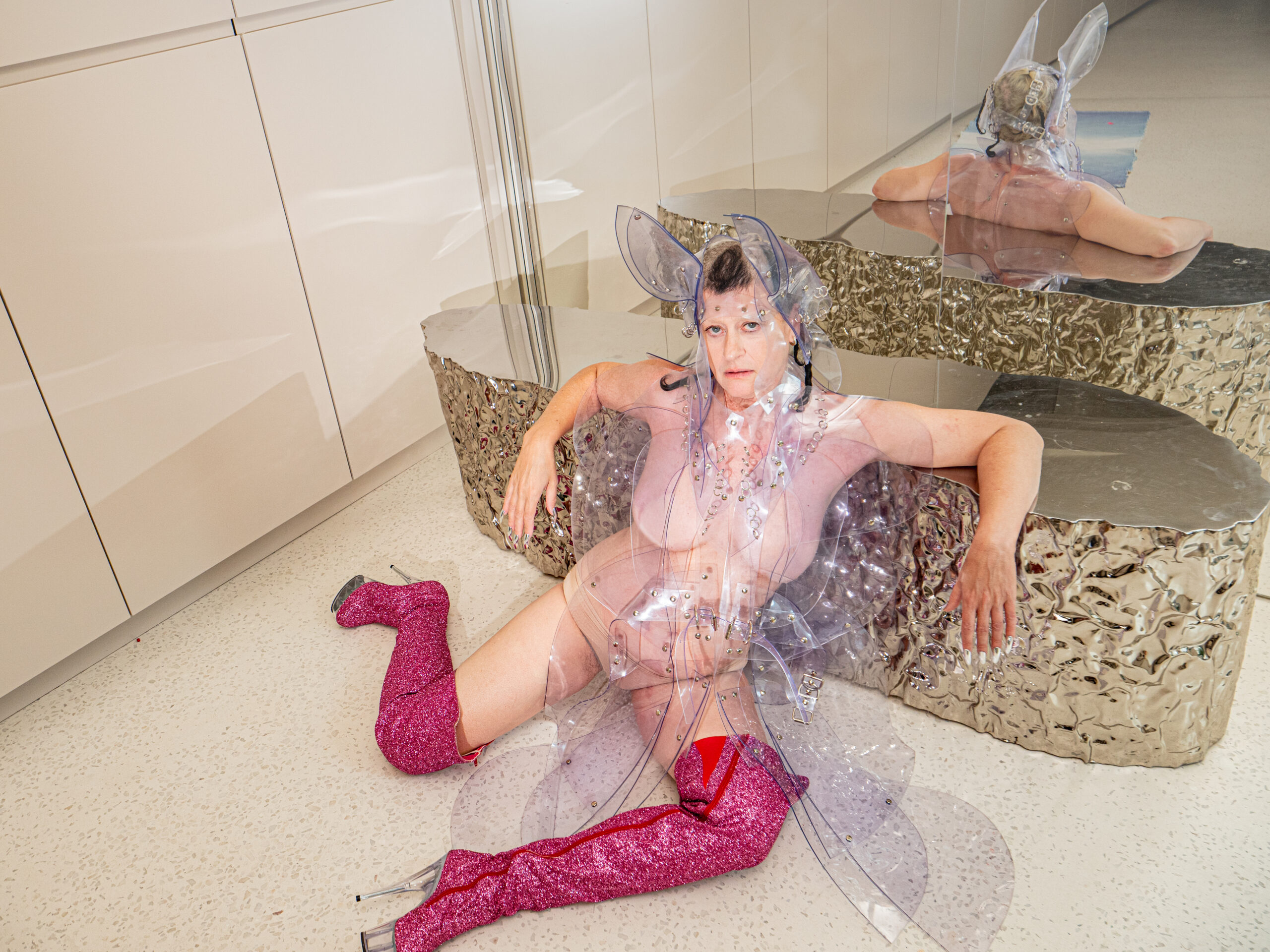
Photo by The Squirt Deluxe
In a way, the silencing and neglect of Women’s health backfired, because this conversation is nothing if not groundbreaking and energized. There’s nothing elderly or sedate about the way you navigate these discomforts for listeners.
That’s the point, too. You don’t have to present talking about aging or bodies in transition in a traditional way, the presentation you’re used to seeing. I’m just being who I am. But I happen to be this age and to be having these experiences.
Can you talk about the way you frame aging not as a fault, but as a full on flex on this record?
I think the first song is a total flex. That’s the first song of that exactly. You think of all the flexes we know: skinny waist, big hips…blah blah blah. Those are the usual flexes, but my flexes are Hanging Titties. I’m older than you, and looking so cunt.
I think because, and you allude to this in the movie too, old people are punks now. We can’t keep looking at older generations like they’re an other, because we’re actually very blessed generationally that our elders are punk as fuck now…
And you know what else? People are living longer. So 60 is not even old. You have to think of these ages and stages differently now.
I’ve been listening to this podcast by Julia Louis-Dreyfus; she’s hardly my guru, but this podcast is. She only interviews women older than her. Carol Burnett was on and she’s 90. Gloria Steinem, 90. Rita Moreno, 93. Patti Smith, 79. Glenn Close, 80. The first question she asks is do you mind telling your real age and they’re always like no. You see how they’re coming into their own at these ages because of generational and ancestral traumas. It’s a very important time.
And if you think about Gen Z or whatever, they’re not as interested in coming together physically, but older people are. Now it’s like your grandparents are more punk than you.
We’re not supposed to hear from women who are menopausal or post-menopausal because your time is done, you’re expired. It’s like they’re using biology against women. From your perspective, the post-menopausal state ends up being a place of power, of reinvention. I love how on this record, even though you’re navigating all those changes, you never feel a sense of loss. Can you speak to your experience around that?
The whole medical system, even gynecology, is not geared towards women historically in terms of the care of women and around birth. It was not in hospitals with male doctors.
I find my power by finding ways to be creative. I find ways to show that it’s not over. You don’t have to represent yourself in ways you don’t feel like you are aligned with. In the way, everything I’ve done in my history, is expressing that you don’t have to represent yourself in ways that traditionally or other ways people may expect from you.
I know that it will probably take time before people totally understand what this new conversation is. Whenever you’re working with taboo subjects, people might see what I do, like, “Isn’t she just being immature? Shouldn’t she just act her age?”
There might be some of that. And I think that that’s just also a testament of the exploration and the recognition that traditionally we have ignored these women, and that we will be seeing more conversation around these issues.
Your work continues to attract and inspire young people, and youth culture today. How has your audience changed, and how do you think it will feel singing about these later-life issues to those younger audiences?
I think it’s going to feel really good. If they don’t want to hear it, don’t come. This is where I’m at and that’s what I’m doing. It’s interesting for me and it’s going to be interesting for somebody.
It started to change when I saw older fans becoming moms and bringing their daughters, or dads bringing their daughters, or families showing up. The inter-generational conversation is so important and misunderstood right now in terms of how younger generations call out things.
They’re smarter in terms of information and vocabulary, but sometimes they don’t understand older generations and how they got to where they are. They have to realize context and have conversations with each other.
Do you think there’s more of a conversation between youth culture and older generations because we’re trying to find common ground through language?
I don’t think there is. I think there’s a lot of older people saying, “Oh, the young people!” and young people saying, “Oh, the old people!” You really need to get it together, both of you. Let’s go! So I’m feeling like an album like this maybe could help be a bridge in those terms.
The album title, No Lube So Rude, on a universal level is talking about how it’s getting very polarizing. There’s so much friction between people, even those you feel you align with. We have to find a way to have conversations with each other and not keep silent and have conversations with people we don’t agree with.
If there was some ointment, something like a lube that could help loosen it up so people could have a conversation the same way that if you’re having sex and there’s friction, it’s helpful to get to where you want to go and open things up more.
The idea of friction is interesting because your work is consistently about contradiction and juxtaposition. The press release describes it as “poetic and profane,” which you’ve navigated as a profession for this long. And it’s funny thinking about friction and lube and menopause. It’s like an activation. You’re like, “No, I still got this pussy, I just need a little lube.”
It’s obviously useful for post-menopausal, but it’s also useful for everyone. It’s not just for gay boys who forgot their poppers. And if you don’t bring it, it’s rude! If you don’t bring this conversation, if you don’t bring this element of openness, if you don’t bring this like we’re in this together, it’s rude. And that’s what No Lube So Rude is.
Has your openness as an artist ever acted as a detriment to your personal boundaries? In Marie Losier’s 2025 film, Peaches Goes Bananas, you allow viewers into some very hard and private elements of your life that must be very difficult to revisit. Are you able to establish those boundaries of personal comfort, when your job is essentially to brave uncomfortable topics for others?
I don’t feel like I have to bear it all if I don’t want to. I feel like, if I can go way back to when I made The Teaches of Peaches: that was like a heavy breakup album and a post-cancer album, and I never spoke about either of those things.I never ever in the press said that these are breakup songs, or I just had thyroid cancer and it changed my life and made me decide I wanted to be an artist for life. Because I didn’t want to use any of those, also being a new artist, as a sort of victim or weaponizing my situations.
I was lucky with my thyroid cancer, as its one of the more treatable cancers to have, but it still just messes with your brain, confronting mortality and thinking about all that.
I feel like Marie Losier’s film about you is like a subcultural Truth or Dare, the Madonna movie. What was your experience being followed over such a long chunk of your career, including the most vulnerable bits?
I haven’t seen the movie in so long. I know that there’s a lot of hotel telephone conversations, and there’s a lot of performance. I have to watch that. Marie’s movie took place for 17 years, showing my relationship with my sister. That was my biggest vulnerability.
And seeing your dad too. Beauty. It was a hard watch. I’m not asking you in an interview right now, I’m asking just as a friend, how you feel about the movie as a piece of art. It’s interesting to think about your commitment to honesty, but also wanting to control perception or representation?
It helped knowing that Marie “got it.” It’s her lens and her art and her aesthetics, but I could get into it with her. I trusted her. There’s still a truth in choosing the story that you tell. It can be truer than just showing it all.
The openness that you have as a performer reminds me of Cut Piece by Yoko Ono, which you have performed on various occasions, most recently last year in the atrium of the Gropius Bau in Berlin. Does that resonate with you? Can you talk about that performance?
Yeah, I can talk about that performance for sure. So it’s the second time that I did that performance. I did it in 2012 at Yoko’s request for the Meltdown Festival. And I think in a way they were quite different experiences because I really didn’t know what was going to happen.
I knew that I would sit still and I would let people cut clothes off my body, but I didn’t realize how much it would affect people and how much it would be about their own personal experience and how much people would be shaming other people and yelling at other people in the audience. Or how people wanted to talk to me, tried to provoke me to speak, or felt really unheard or unseen by me, or cut my hair, stole my shoes, tried to manipulate me, tried to honor me.
So it was just like a masterclass at understanding people’s projections.
Did you sense a change in tone in what was being projected in terms of the audience as a mirror of where we’re at culturally when the piece is being performed?
I think with the second [2025] performance, it was a very different experience. It felt like maybe because it was in Berlin more than London or somewhere, but also it being this time in the world.
So with this performance, there was also an element of tension around political silencing happening [in Germany] right now. For instance, someone draped a Palestinian flag around me, and then a Zionist came by and was very upset and pulled it off me and then ran out really upset and then somebody else put it back on me and I had to just sit there silently.
In both performances, people tried to dress me, cloak me, symbols of their own right, sweaters or whatever. And some people were very emotional. Someone stole the scissors. They were like I don’t want to see this anymore and stole the scissors and then a pair of scissors showed up and then someone stole those and then somebody brought a knife from the kitchen! And then my friend who’s a doctor just whispered in my ear, there’s a knife in front of you and I don’t feel comfortable and I’m taking it away.
It felt like the second performance hit on a lot of discomfort with the audience reacting to that and not understanding that that is in fact the assignment.
With social media, the proximity between fans and artists has significantly closed so much and Cut Piece’s relevance evolves with the shifting social climate. Your work is very physical and unpretentious in the way that you encourage your fans to be part of it, to break down the relationship between art and the observer. Did you sense that feeling of ownership on behalf of the audience, in the way that one’s perception of access to your body was being exploited or uncomfortable while having to remain silent?
I didn’t move. I actually felt very calm in that sort of setting, somehow. With all that chaos and everything, I felt very comfortable performing…
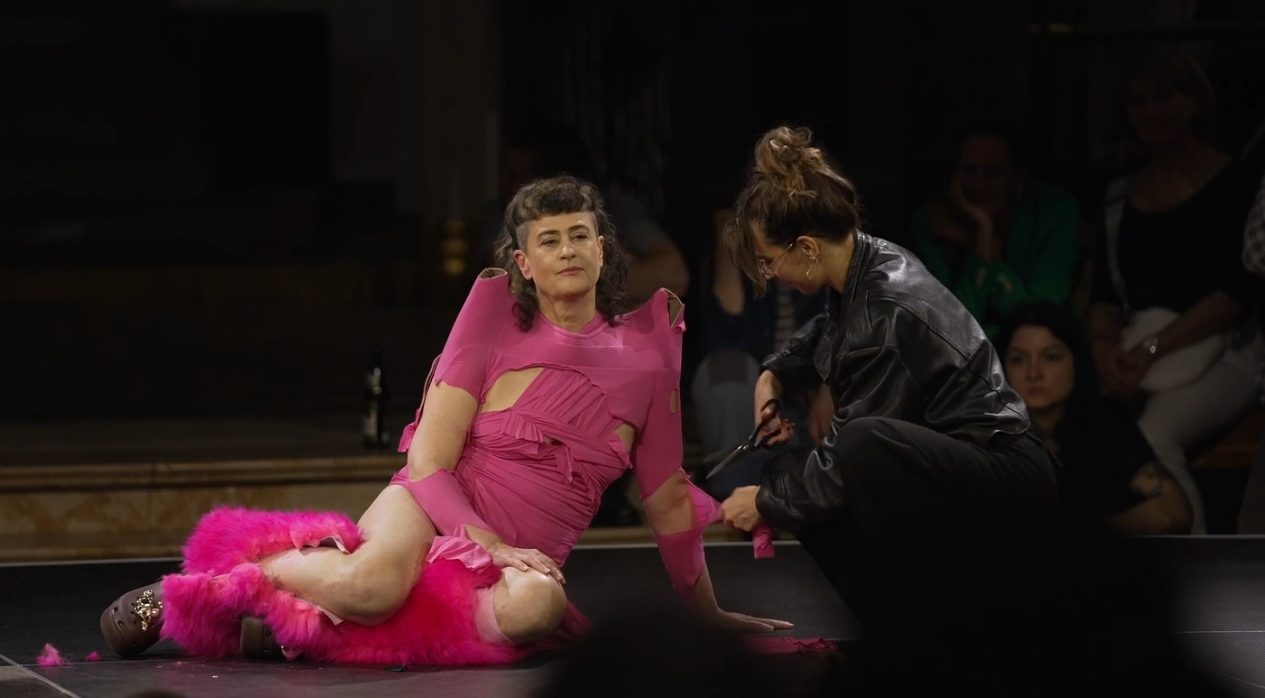
Peaches performs Yoko Ono’s Cut Piece at the Gropius Bau in Berlin, May 2, 2025
Do you find there are misconceptions about you as a person, because of the physicality, and relatability that is so present in your work? Do your fans confuse you for a sex-obsessed party freak? In Peaches Goes Bananas, you describe mostly being in your hotel room all day before performing, because performing this aggressive openness actually is a performance. It takes a lot of work. It’s a technical thing. You have to really contain all of that physicality.
I think it’s about recognizing that you can’t foresee the context that brought that person to this moment. You have to cross them when they come and understand all those things that we were just talking about. And I think with Cut Piece, you see it all there—it reveals things although it can be hard to, and that’s why it’s such an incredible piece that’s 60 years old.
How was the process of making and being creative with so much heavy shit going on in your personal life, not to mention the reality of existing in arguably the darkest time in history? Did that affect your motivation, or is the rage on the record sort of a reaction to that?
It’s definitely a reaction, but you also have to watch out for all those moments of self-doubt, in terms of, “Should I be doing this? What am I doing this time? Who am I? Is it relevant?”
You have to still find what makes you tick and do it because that is going to motivate your activism and your creativity. In dark times you have to be aware of all of those who are inherently trying to make you fearful.
That’s what the whole plan is: Try to make you scared, make you think that what you’re doing is wrong. It’s easy for that to creep in, and you have to navigate yourself.
Was there a point where you actually were second-guessing getting into this fearless approach to the topics on this record?
Nope. Never had a problem with that part! Do you remember the band Klymaxx in the ’80s? They had a song called “Meet Me in the Ladies Room”? Well they had another song called “The Men All Paws…” I was thinking about covering that.
In terms of newness, you’ve spoken about reflection. I noticed on social media that you were dragging out all your old costumes, getting ready for the new tour. Is there an element to reinventing past elements of Peaches into this new stage show?
Those were actually not old costumes, but a collection I bought from an old opera company!
Oh wow… That’s so New Romantic of you!
I bought tons of costumes from a costume sale because they’re very good quality and they also have the construction for stage. That’s what we were remixing, this stuff. But also that speaks to sustainability too.
Do you have a sense of what you’re going to do for the live show, thematically?
Yeah. The aesthetics of the live show are based around prolapse.
Oh my god. Okay. I almost don’t want to ask more because that’s really interesting. How did you come to that?
That really just came. The imagery is a little more distorted. Real and distorted.
There’s a lot of deprogramming happening culturally, and this goes back to speaking to your elders who’ve already seen large amounts of change in their lives. This record is as much about love as it is protest, which “Be Love,” the closing track, speaks to directly. How do you envision taking these themes to the dance floor, which is commonly thought of as a place for joy and release?
Do you think they should be separate? Revolution needs to be joyful. And crying on the dance floor. What’s wrong with that? What’s wrong with all the emotions coming out? The dance floor needs to be used for all of it.
Maybe that’s why clubs are closing, because people are feeling afraid they have to be a certain way. And it’s okay to be emotional on the floor, and it’s okay to use it as a place to vent your emotions and find your collective rage.
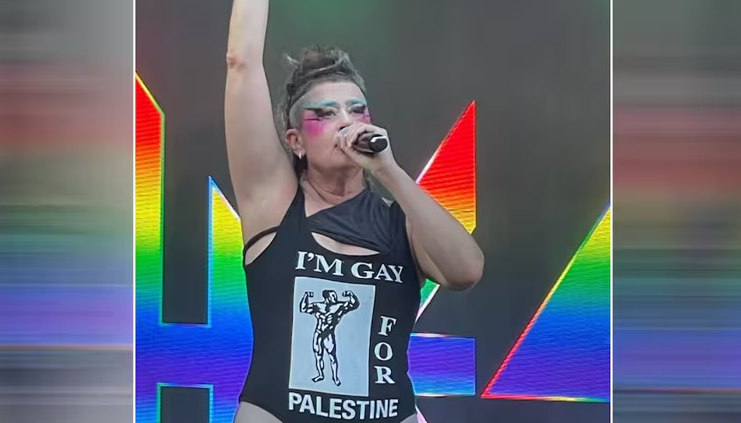
Do you still find an outlet or a comfort in the club space as you age?
I feel at home in my community. Physical community. My community is very performative, too. So when we can perform for each other or dance with each other, there’s a joyfulness.
Do you feel conflicted about making club music, or performing acts that bring joy, in the face of current events and the permanent state of mourning we are currently navigating?
You can’t feel guilty and you have to dance. This is like a Hannah Arendt situation—the revolution must be joyful or there will be no revolution.
What lube do you use?
I’m developing my own lube right now! I’m working with Medicine Mama in the States. It’s called No Lube So Rude. It’ll be available on tour.
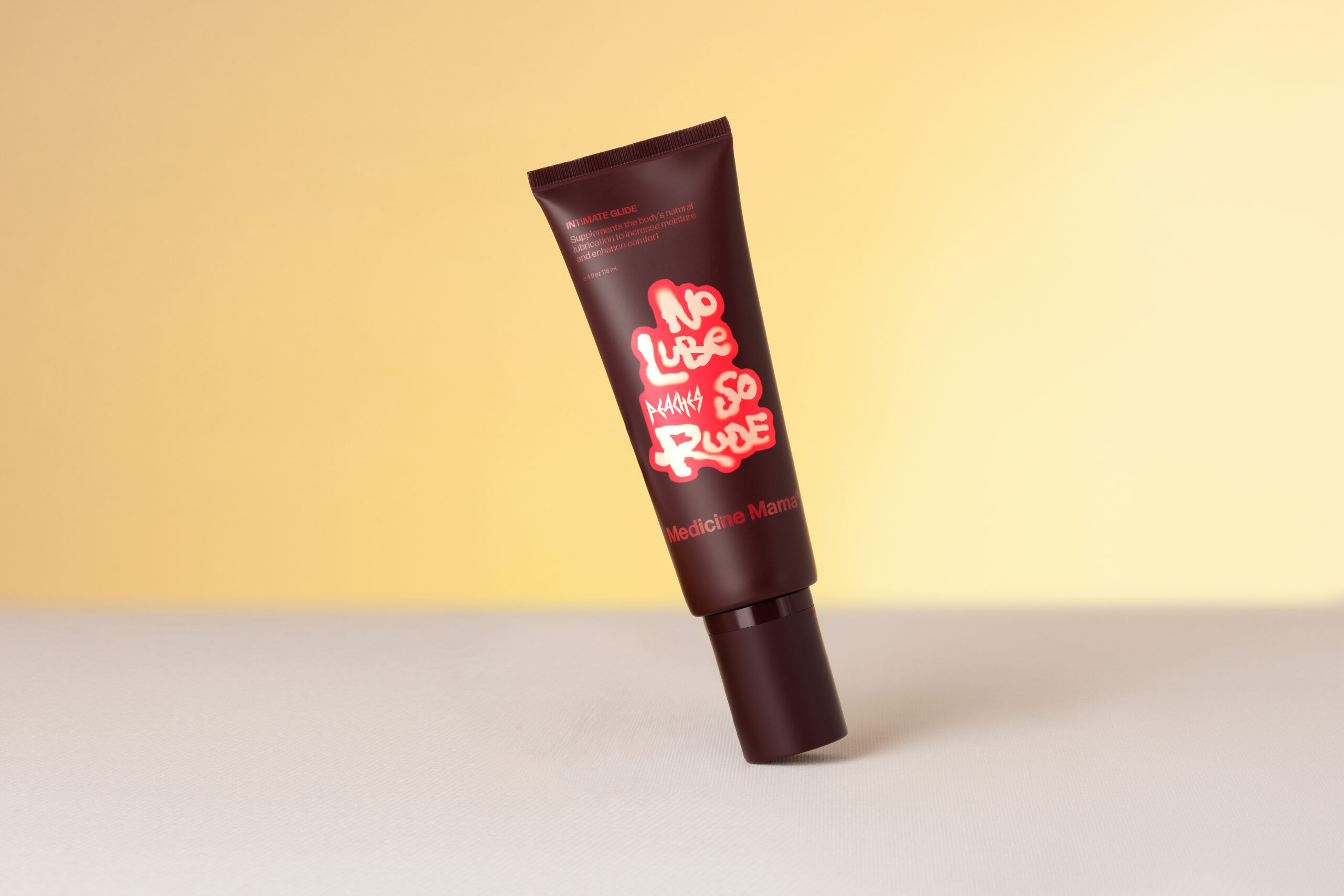
“No Lube So Rude” lube by Peaches x Medicine Mama
So how does it feel going through this whole rigmarole of album roll-out at the age that you’re at? And obviously the climate of the music industry has totally changed. Is it a slog?
It’s very confusing. It’s confusing understanding what an album even means. Then it’s confusing understanding how the roll-out happens, how much more work it is for you, the artist and your relationship to your own content as a creative element for the music, not as a trending or viral thing.
There’s no other platforms right now for that in terms of those visuals, so it’s about maximizing creativity in these more recent formats.
This album roll-out is reminding me of the concept of Kembra Pfahler’s concept of Availabism. How do you find the balance between being an international superstar and at the same time being forced into these kinds of DIY approaches at this stage of your career?
I love DIY approaches. I’ve always done all my videos and work in that way. I’ve made fancier videos at times but it was just that I allotted money to them—not that they were less resourceful or creative.
But it’s a lot of work on yourself. There’s just a lot of work to be done, a lot more work, a lot of your own promotional work. It’s like asking your promotional people to make an album a month. Because they’re asking you to do all the work.
And what does it mean? When you’re doing articles for print magazines, what does that mean? Who really reads them? Who listens to an album? Everything seems very abstract, and I can’t get caught in that. Someone’s Substack post might generate way more interest than a Rolling Stone article in Canada.
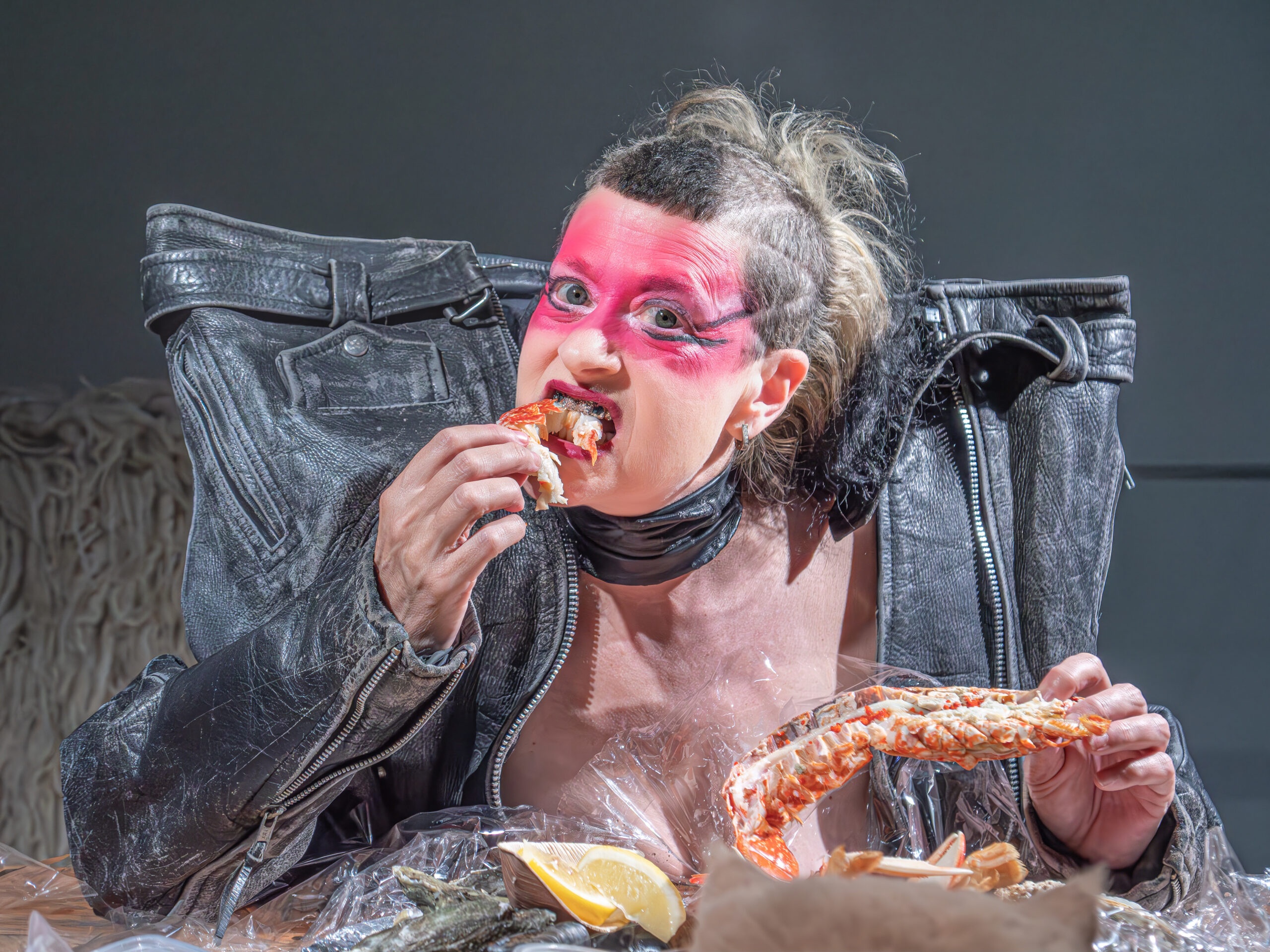
What would you say to artists who are taking their work really seriously and can’t find a label? Like, what does a label even do? You want to take your career to the next level, but you self-release your music and then you look like a loser who is posting your music online. How do you feel taken seriously as a young artist now?
I have no idea. You just keep doing what you’re doing. I don’t know. I really wish I had the golden secret. I procured a label. I’m with Kill Rockstars, which is very indie. It’s good to have partners. In this situation, it’s more indie. It’s not like they’re Atlantic Records taking everything.
I’m constantly baffled by your inability to stop. You can’t pour from an empty cup, but it seems like the going itself is what keeps you going?
That’s what keeps me going. It’s just that at this point things need to be done. So we’re doing them. But I will sleep too.
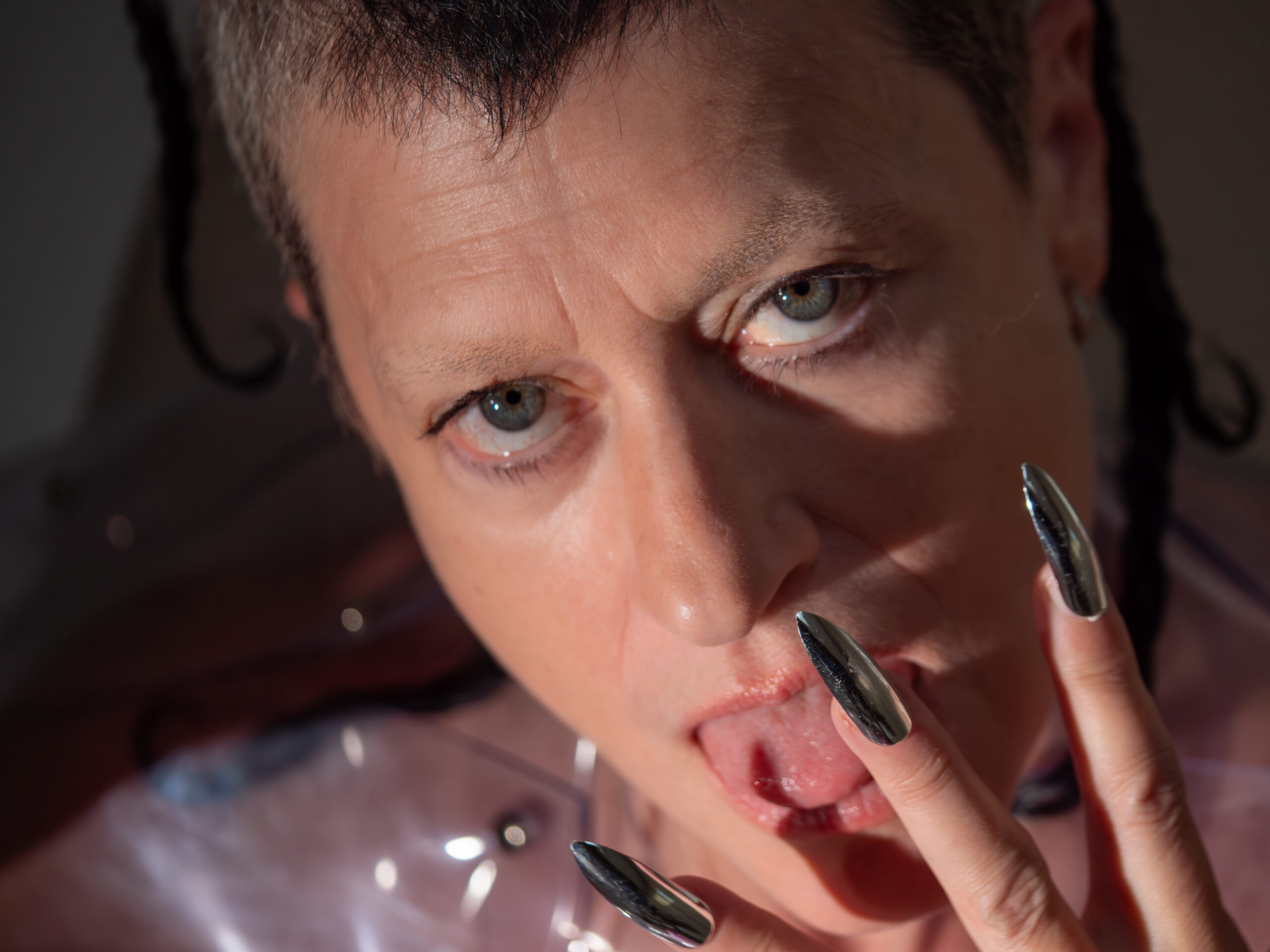
Do you ever think that you use this incessant work as avoidance?
It’s something I’ve been used to that I do. It’s part of my practice to keep going in this way. But I will also be happy to take a big, huge break after this.
— Q&A by Kevin Hegge (@theekevinhegge)
Find Peaches tour dates, music, lube, and more at teachesofpeaches.com.
Be the first to comment on "OMG, a Q&A with Peaches"